• ul. Białostocka 22, 03-741 Warszawa
  • info@fabrit.pl
  • +48 515 415 270

CARE BEDS ASSEMBLY LINES

For a manufacturer of rehabilitation beds, we completed the modernization of two assembly lines:

  • a frame (bed base) assembly line,

  • a front panel assembly line.

The objective of the project was to reorganize the production process, improve workplace ergonomics, and increase overall operational efficiency.

Fabrit delivered the solution as a comprehensive project – from concept development and detailed engineering to installation and commissioning at the client’s facility.
Client Challenge

Previously, the beds were assembled on standalone worktables. After completing each operation, operators manually transferred the frames from one station to another.

At one stage of the process, the heavy bed frame also had to be manually rotated.

This resulted in:

  • significant physical strain on workers,

  • repetitive lifting of heavy components throughout the shift,

  • staffing limitations (women could not work at the line due to the manual rotation of heavy elements),

  • non-ergonomic workflow organization,

  • limited potential for production scaling.

The client required a solution that would eliminate manual handling and rotation of heavy components while improving safety and process stability.

Scope of Work

Fabrit was responsible for the complete implementation of both assembly lines, including:

  • development of the conceptual design,

  • preparation of full production documentation,

  • manufacturing and mechanical assembly,

  • delivery to the client’s facility,

  • installation and commissioning,

  • post-implementation service support.

Implemented Solution

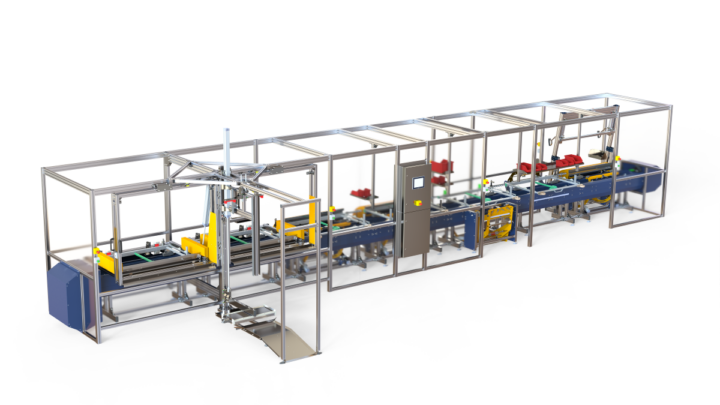
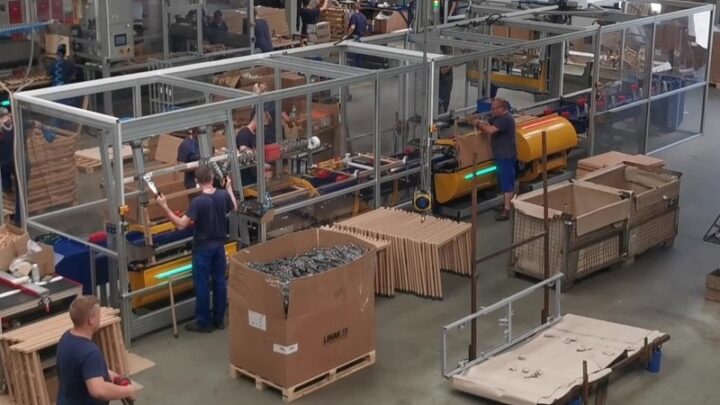
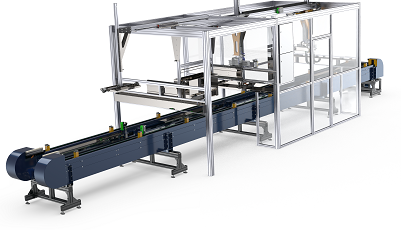
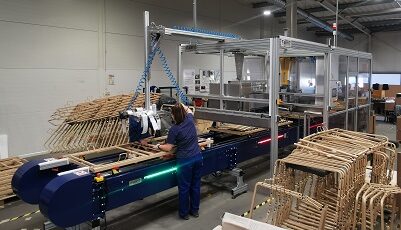
We designed two structured assembly lines equipped with an integrated inter-station transport system, eliminating the need for manual transfer of heavy frames.

A key element of the frame assembly line was the implementation of a mechanical rotation system, enabling safe and controlled turning of heavy components without physical effort from the operator.

The new workstation layout:

  • optimized material flow,

  • eliminated manual lifting,

  • significantly improved ergonomics,

  • increased operator safety,

  • standardized and stabilized the assembly process.

Frame assembly line

Fronts assembly line

Results

  • complete elimination of manual transport between stations,

  • removal of manual frame rotation,

  • significant reduction of physical strain on operators,

  • possibility for both male and female operators to work at the line,

  • improved workplace safety and ergonomics,

  • increased process repeatability and stability,

  • preparation of production for further automation and future capacity expansion.