• ul. Białostocka 22, 03-741 Warszawa
  • info@fabrit.pl
  • +48 515 415 270

Robotic Cleaning Cell for Machined Castings

For a manufacturing client, Fabrit designed and implemented a robotic cleaning cell dedicated to handling cast components after machining and dimensional quality inspection.

The objective of the project was to automate a previously manual workstation, increase process throughput, and ensure stable, repeatable cleaning quality.
Client Challenge

The cleaning process for machined castings was previously performed manually. The operator was responsible for:

  • collecting parts from the lathe,

  • transferring them to the cleaning station,

  • placing the part into the cleaning machine,

  • supervising the cleaning process.

The manual workflow resulted in:

  • limited productivity,

  • inconsistent process repeatability,

  • unnecessary operator workload,

  • bottlenecks as production volume increased.

The client required a solution that would automate part transfer, reduce operator involvement, and significantly improve station efficiency.

Scope of Work

Fabrit was responsible for:

  • development of the robotic cell concept,

  • mechanical design and system integration,

  • selection and integration of a collaborative robot (cobot),

  • integration of conveyor systems,

  • integration of a three-chamber cleaning machine,

  • commissioning and process optimization.

Implemented Solution

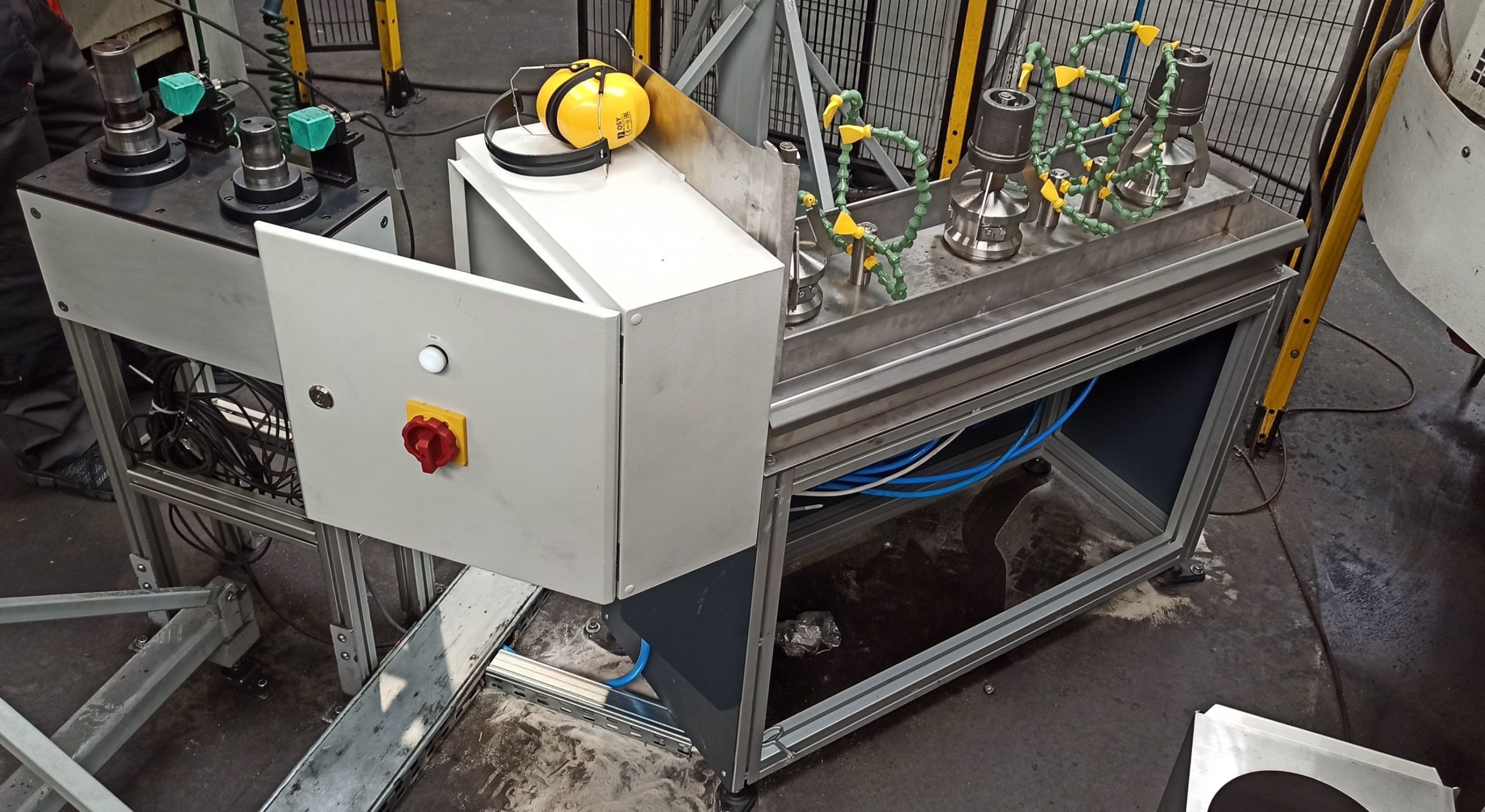
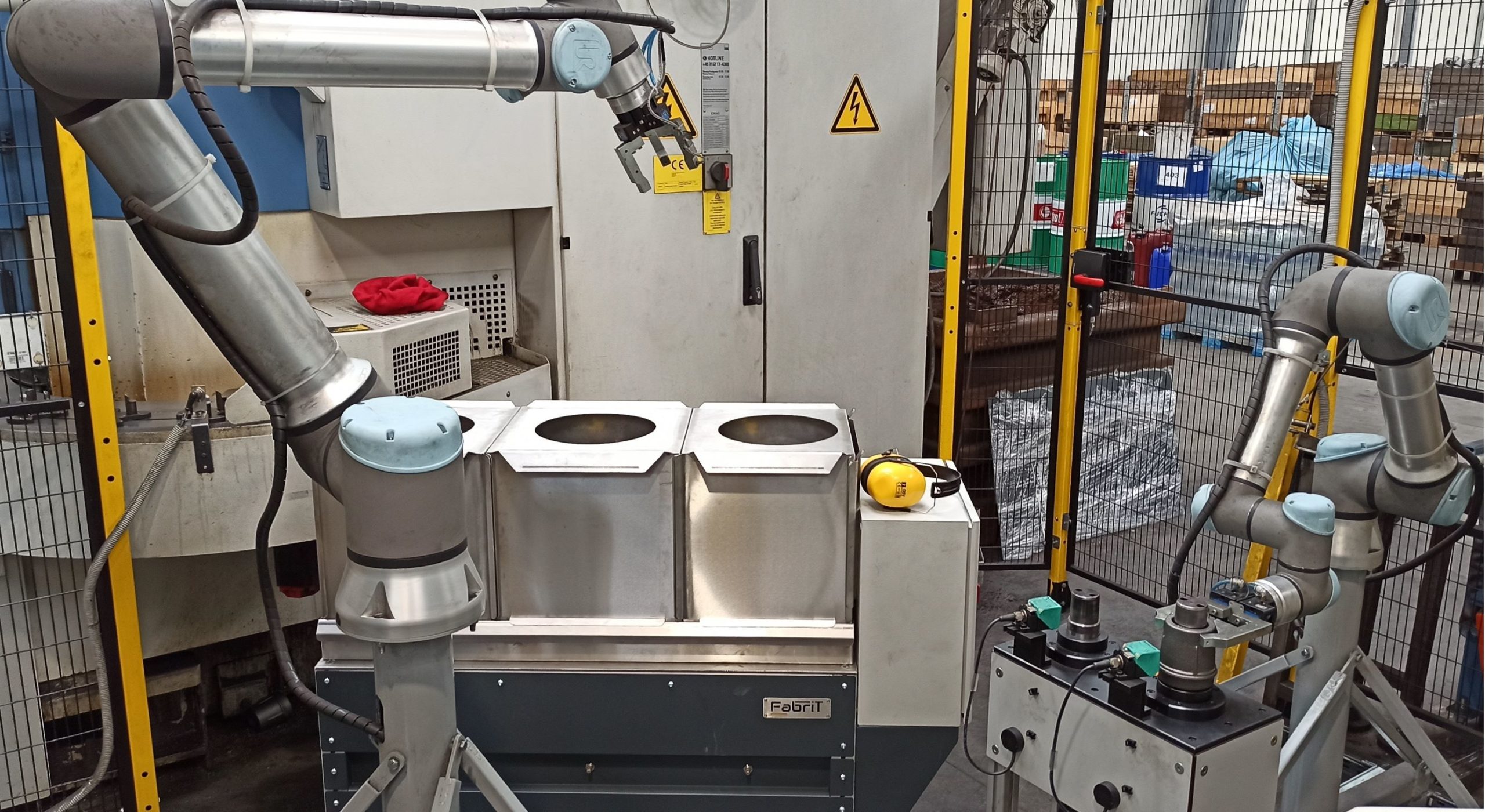
After machining, components are transferred directly from the lathe to a conveyor system. From the conveyor, a collaborative robot picks up the part and loads it into the cleaning machine.

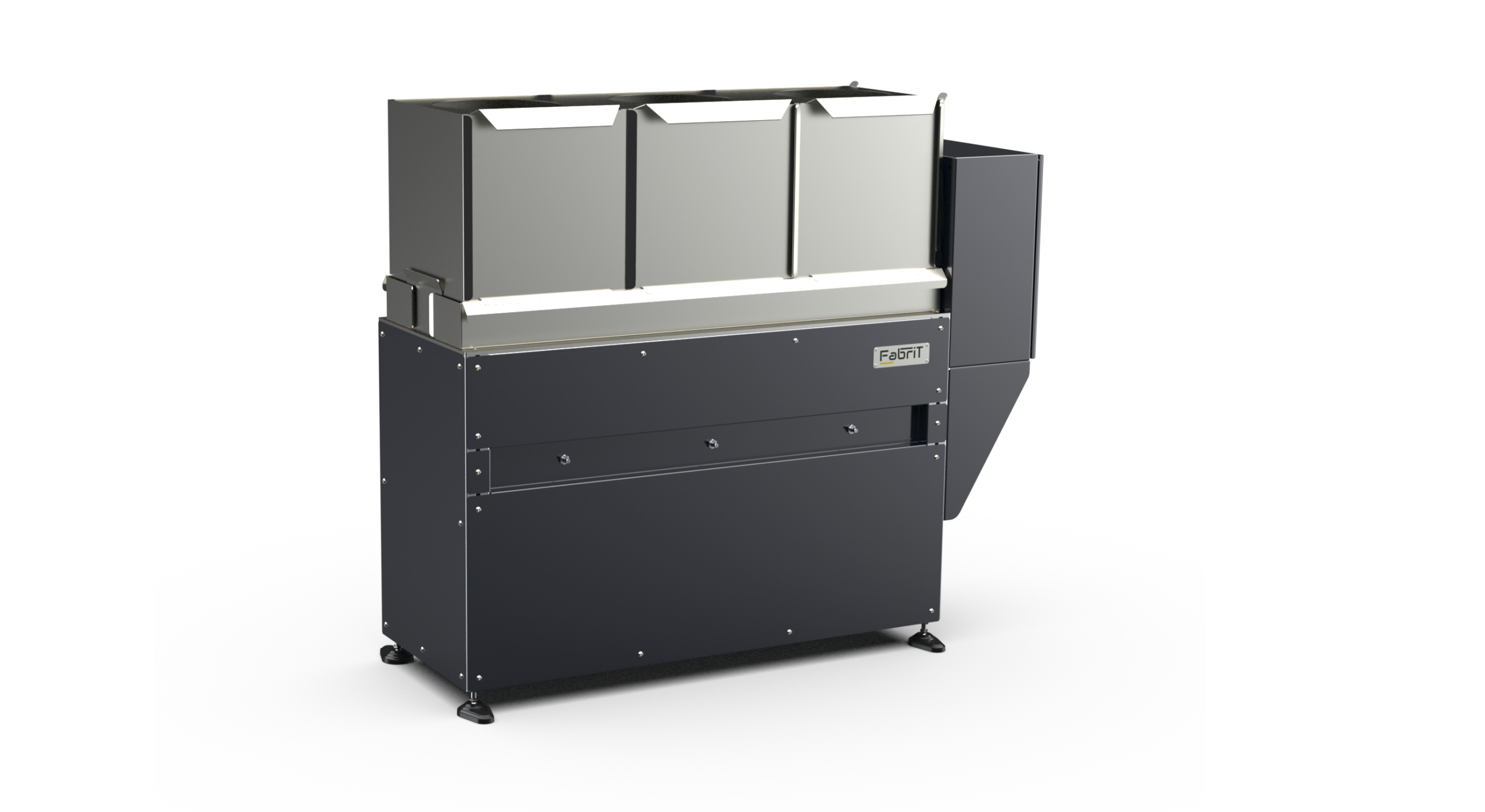
The cleaning unit is equipped with three working chambers, allowing parallel cleaning cycles and significantly increasing process throughput.

Inside the chamber, the component is rotated and cleaned using compressed air, ensuring effective removal of machining residues and contaminants.

The robotic cell:

  • automates inter-operation handling,

  • stabilizes cleaning quality,

  • minimizes downtime,

  • improves workplace safety and ergonomics.

Results

  • full automation of the cleaning workstation,

  • increased productivity thanks to the three-chamber cleaning system,

  • elimination of manual part handling,

  • improved cleaning repeatability and consistency,

  • reduced operator workload,

  • better integration with the machining process.